100 Beautiful Arabic Words: Meanings, Pronunciation & Examples
Explore 100 beautiful Arabic words with clear meanings, pronunciation guides, and simple example sentences for learners.
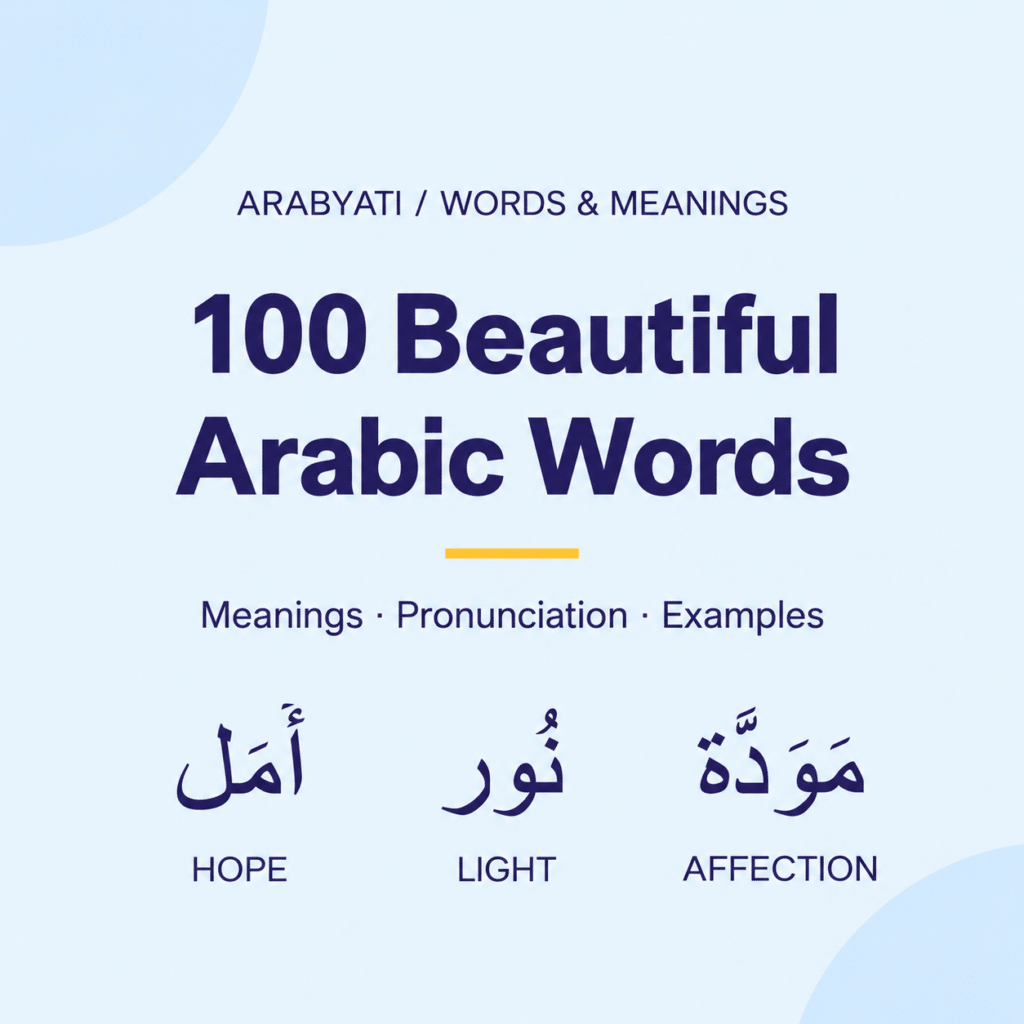
Arabyati · Words & meanings
أَمَل · نُور · مَوَدَّة
Beautiful Arabic words can be memorable because of their sound. Others stay with you because they name something you value: friendship, hope, a quiet evening, or the first light of day.
Beautiful Arabic words include أَمَل (amal, hope), نُور (nūr, light), مَوَدَّة (mawadda, affection), and سَكِينَة (sakīna, tranquillity). There is no single “most beautiful” word: your choice will depend on its meaning and the experiences you associate with it.
This guide brings together 100 words in ten groups, with pronunciation guides, English meanings, and original example sentences. Use it to find a few words you want to say—not just a list you want to finish.
Pronunciation guide · How to read these words
These are Modern Standard Arabic words. Some also appear in everyday dialects, sometimes with different pronunciations or meanings. More literary choices are identified below the tables.
The pronunciation column is a transliteration, not an audio recording. ā, ī, ū are long vowels; sh is like the sound in “ship”; kh resembles the sound in Scottish “loch”; gh represents غ, a voiced sound made toward the back of the mouth. ḥ represents ح, a deeper throat sound than English h, and ʿ represents ع. ʾ marks a brief break in the voice, like the catch between the two parts of “uh-oh.” ṣ, ḍ, ṭ, ẓ distinguish the emphatic Arabic consonants from s, d, t, and dh. th is like “think,” and dh is like “this.” Doubled consonants are held longer.
Standalone words are given without grammatical case endings. A final ة is shown as -a in this simplified reading form; it can be pronounced t when linked to another word in a grammatical construction. Example sentences use light vowel marking where it helps clarify the target word, rather than full vocalisation.
If you need a broader starting vocabulary, explore our 100 essential Arabic words for beginners.
1. Beautiful Arabic Words for Love and Connection
These words cover different kinds of closeness. They do not form a fixed sequence of “stages of love,” and several work in family relationships and friendships as well as romantic contexts.
ḥubb
Love
حُبّ القراءة يجمعنا.
A love of reading brings us together.
mawadda
Affection
بين الجارين مَوَدَّة واحترام.
There is affection and respect between the two neighbours.
ulfa
Familiarity; closeness
شعرتُ بأُلْفَة في هذا المكان.
I felt a sense of familiarity in this place.
uns
Comfort in company
أجد الأُنْس في حديث جدّتي.
I find comfort in my grandmother’s conversation.
ḥanān
Tenderness
احتضنت الأمّ طفلها بحَنَان.
The mother hugged her child tenderly.
shawq
Longing
أنتظر لقاءك بشَوْق.
I look forward eagerly to seeing you.
ḥanīn
Yearning; nostalgia
أشعر بحَنِين إلى بيت طفولتي.
I feel nostalgic for my childhood home.
wafāʾ
Loyalty; faithfulness
أقدّر وَفَاء صديقي.
I appreciate my friend’s loyalty.
ṣadāqa
Friendship
بدأت صَدَاقَتنا في المدرسة.
Our friendship began at school.
liqāʾ
Meeting; encounter
كان لِقَاؤنا قصيرًا وجميلًا.
Our meeting was brief and lovely.
Usage note: حَنَان (ḥanān) is tenderness; حَنِين (ḥanīn) is yearning or nostalgia. The vowels change the word and its meaning. In the last example, لِقَاء appears with the attached ending “our,” so its spelling changes to لِقَاؤنا.
2. Hope and Joy
amal
Hope
لديّ أَمَل في غدٍ أفضل.
I have hope for a better tomorrow.
faraḥ
Joy
امتلأ البيت بالفَرَح.
The house filled with joy.
bahja
Delight
أضافت الأزهار بَهْجَة إلى الغرفة.
The flowers brought delight to the room.
surūr
Pleasure; joy
أساعدك بكلّ سُرُور.
I’ll gladly help you.
saʿāda
Happiness
أشعر بالسَّعَادَة مع عائلتي.
I feel happy with my family.
tafāʾul
Optimism
أبدأ الأسبوع بتَفَاؤُل.
I begin the week with optimism.
bushrā
Good news
حملت الرسالة بُشْرَى جميلة.
The letter brought lovely news.
ibtisāma
Smile
استقبلتنا بابْتِسَامَة.
She welcomed us with a smile.
ḍaḥka
A laugh
سمعتُ ضَحْكَة من الغرفة.
I heard a laugh from the room.
mutʿa
Enjoyment
أجد مُتْعَة في تعلّم اللغات.
I find enjoyment in learning languages.
Try this: أَمَل usually refers to hope, while تَفَاؤُل describes optimism. You can have hope for a particular result and approach a situation with optimism.
3. Calm and Well-being
salām
Peace
نريد أن نعيش في سَلَام.
We want to live in peace.
hudūʾ
Calm; quiet
أحبّ هُدُوء الصباح.
I love the quiet of the morning.
sakīna
Tranquillity
وجدتُ سَكِينَة في هذا المكان.
I found tranquillity in this place.
ṭumaʾnīna
Reassurance; peace of mind
منحني صوتها طُمَأْنِينَة.
Her voice gave me reassurance.
rāḥa
Rest; comfort
أحتاج إلى رَاحَة قصيرة.
I need a short rest.
riḍā
Contentment; satisfaction
شعرتُ بالرِّضَا عن عملي.
I felt satisfied with my work.
amān
Safety; security
يشعر الطفل بالأَمَان هنا.
The child feels safe here.
ʿāfiya
Good health; well-being
أتمنّى لك الصحّة والعَافِيَة.
I wish you health and well-being.
insijām
Harmony
تعمل المجموعة بانْسِجَام.
The group works in harmony.
tawāzun
Balance
أبحث عن تَوَازُن بين العمل والرَّاحة.
I’m looking for a balance between work and rest.
Usage note: هُدُوء can describe a quiet room or a calm person. سَكِينَة often has a more reflective tone, describing tranquillity. They can overlap, but they are not interchangeable in every sentence.
4. Kindness and Values
luṭf
Kindness; gentleness
شكرًا على لُطْفك.
Thank you for your kindness.
raḥma
Mercy; compassion
عامل الحيوان برَحْمَة.
He treated the animal with compassion.
karam
Generosity
شكرناهم على كَرَمهم.
We thanked them for their generosity.
ʿaṭāʾ
Giving
أقدّر عَطَاء المعلّمين.
I appreciate what teachers give to others.
iḥsān
Doing good; kindness
الإِحْسَان إلى الجيران مهمّ.
Being kind to neighbours is important.
tasāmuḥ
Tolerance; forgiveness
يساعد التَّسَامُح على حلّ الخلافات.
Tolerance helps resolve disagreements.
ṣidq
Honesty; truthfulness
تحدّثتُ معه بصِدْق.
I spoke to him honestly.
amāna
Trustworthiness
يعرفه الجميع بأَمَانَته.
Everyone knows him for his trustworthiness.
tawāḍuʿ
Humility
أعجبني تَوَاضُعها رغم نجاحها.
I admired her humility despite her success.
īthār
Altruism; putting others first
أظهرت إِيثَارًا حين أعطت مقعدها لغيرها.
She showed selflessness when she gave her seat to someone else.
Usage note: أَمَان is safety; أَمَانَة can mean trustworthiness or something entrusted to someone. إِيثَار is a more advanced word than everyday expressions such as “helping others.”
5. Strength and Growth
ṣabr
Patience
تعلّم مهارة جديدة يحتاج إلى صَبْر.
Learning a new skill takes patience.
shajāʿa
Courage
الاعتراف بالخطأ يحتاج إلى شَجَاعَة.
Admitting a mistake takes courage.
ʿazīma
Determination
واصلت التدريب بعَزِيمَة.
She continued training with determination.
iṣrār
Persistence
ساعدني الإِصْرَار على إكمال المشروع.
Persistence helped me finish the project.
thabāt
Steadfastness; stability
واجهت الصعوبة بثَبَات.
She faced the difficulty with resolve.
karāma
Dignity
لكلّ إنسان كَرَامَة.
Every person has dignity.
ḥurriyya
Freedom
لديّ حُرِّيَّة اختيار عملي.
I have the freedom to choose my work.
numuww
Growth
أراقب نُمُوّ النبتة.
I watch the plant’s growth.
tajaddud
Renewal
يذكّرني الربيع بالتَّجَدُّد.
Spring reminds me of renewal.
izdihār
Flourishing; prosperity
ساعد التعليم على ازْدِهَار المدينة.
Education helped the city prosper.
Usage note: عَزِيمَة means determination here. In some regional speech, the same written form can refer to an invitation or a meal gathering. Context matters.
6. Light and Sky
nūr
Light
دخل نُور الشمس من النافذة.
Sunlight came through the window.
ḍiyāʾ
Light; radiance
أضاء القمر الطريق بضِيَائه.
The moon lit the path with its light.
ishrāq
Radiance; shining
أحبّ إِشْرَاق وجهها حين تضحك.
I love the radiance of her face when she laughs.
shurūq
Sunrise; rising
شاهدنا شُرُوق الشمس.
We watched the sunrise.
fajr
Dawn
بدأنا الرحلة عند الفَجْر.
We began the journey at dawn.
shafaq
The glow after sunset
تأمّلتُ الشَّفَق بعد غروب الشمس.
I gazed at the glow after sunset.
qamar
Moon
ظهر القَمَر فوق البحر.
The moon appeared above the sea.
najm
Star
رأيتُ نَجْمًا لامعًا.
I saw a bright star.
samāʾ
Sky
السَّمَاء صافية اليوم.
The sky is clear today.
saḥāb
Clouds
غطّى السَّحَاب قمّة الجبل.
Clouds covered the mountain’s summit.
Usage note: ضِيَاء is a more literary choice than everyday ضَوْء (ḍawʾ, light). شَفَق refers here to the reddish glow after sunset, rather than every possible meaning of English “twilight.” This sense is recorded by the Arabic Language Academy in Cairo.
7. Beautiful Arabic Words Inspired by Nature
nasīm
Breeze
دخل نَسِيم بارد من النافذة.
A cool breeze came through the window.
nadā
Dew
رأيتُ النَّدَى على الأوراق.
I saw dew on the leaves.
maṭar
Rain
بدأ المَطَر في المساء.
The rain began in the evening.
ghayth
Rain, often welcomed as relief
انتظر المزارعون الغَيْث.
The farmers waited for rain.
rabīʿ
Spring
تتفتّح الأزهار في الرَّبِيع.
Flowers bloom in spring.
zahra
Flower
وضعتُ زَهْرَة في المزهرية.
I put a flower in the vase.
warda
Rose
أهديتُ أمّي وَرْدَة.
I gave my mother a rose.
yāsamīn
Jasmine
أحبّ رائحة اليَاسَمِين.
I love the scent of jasmine.
wāḥa
Oasis
توقّفنا عند وَاحَة في الصحراء.
We stopped at an oasis in the desert.
rawḍa
Garden; green meadow
وصف الشاعر رَوْضَة خضراء.
The poet described a green meadow.
Usage note: غَيْث and رَوْضَة have a more literary feel in these examples. رَوْضَة also appears in روضة أطفال, meaning kindergarten. زَهْرَة is a flower; وَرْدَة is specifically a rose.
8. Thought and Creativity
ḥikma
Wisdom
في نصيحتها حِكْمَة.
There is wisdom in her advice.
maʿrifa
Knowledge
تزيد القراءة مَعْرِفَتي بالعالم.
Reading increases my knowledge of the world.
fahm
Understanding
ساعدني المثال على الفَهْم.
The example helped me understand.
baṣīra
Insight
تحدّثت عن المشكلة ببَصِيرَة.
She spoke about the problem with insight.
khayāl
Imagination
يتمتّع الطفل بخَيَال واسع.
The child has a vivid imagination.
ilhām
Inspiration
أجد الإِلْهَام في الطبيعة.
I find inspiration in nature.
ibdāʿ
Creativity
يتطلّب التصميم إِبْدَاعًا.
Design requires creativity.
fikra
Idea
لديّ فِكْرَة جديدة.
I have a new idea.
taʾammul
Contemplation
أمضيتُ وقتًا في التَّأَمُّل.
I spent some time in contemplation.
dahsha
Wonder; astonishment
نظرتُ إلى المنظر بدَهْشَة.
I looked at the view in wonder.
Usage note: بَصِيرَة is insight, not ordinary eyesight. دَهْشَة can describe astonishment at something pleasant or unpleasant; the example gives it a positive context.
9. Beauty and the Senses
jamāl
Beauty
لفتني جَمَال الحديقة.
The garden’s beauty caught my attention.
anāqa
Elegance
أعجبتني أَنَاقَة التصميم.
I admired the elegance of the design.
riqqa
Delicacy; tenderness
تحدّثت برِقَّة إلى الطفل.
She spoke tenderly to the child.
nuʿūma
Softness
أحبّ نُعُومَة هذا القماش.
I like the softness of this fabric.
ʿabīr
Fragrance
ملأ عَبِير الورد الغرفة.
The fragrance of roses filled the room.
arīj
Fragrance
انتشر أَرِيج الأزهار في الحديقة.
The fragrance of flowers spread through the garden.
nagham
Melody; musical tones
استمعتُ إلى نَغَم هادئ.
I listened to a gentle melody.
laḥn
Tune; melody
حفظتُ لَحْن الأغنية.
I memorised the song’s melody.
tanāghum
Harmony
أعجبني تَنَاغُم الألوان.
I liked the harmony of the colours.
barīq
Gleam; sparkle
لفتني بَرِيق الخاتم.
The ring’s sparkle caught my attention.
Usage note: عَبِير and أَرِيج overlap in meaning; أَرِيج is especially suited to literary description. لَحْن means a melody in this guide, although it has other meanings in discussions of language.
Similar Words, Different Meanings
Ḥubb and Mawadda: Love and Affection
حُبّ is a broad word for love: love of a person, a place, or an activity. مَوَدَّة often expresses affection or warm regard between people. Neither word is restricted to romance. Choose according to the relationship and the sentence rather than treating them as fixed steps on a scale.
Amal and Tafāʾul: Hope and Optimism
أَمَل can focus on a particular possibility: hope for a better tomorrow. تَفَاؤُل describes an optimistic outlook. Compare “I have hope” with “I approach the week with optimism.”
Hudūʾ and Sakīna: Quiet and Tranquillity
هُدُوء works naturally when describing a quiet morning or room. سَكِينَة is often used for a sense of tranquillity and can sound more reflective. If you simply want someone to reduce the noise, an everyday expression with هدوء is usually more appropriate.
Shawq and Ḥanīn: Longing and Nostalgia
شَوْق expresses longing or eagerness to see someone or something. حَنِين can express yearning for a person, place, or past experience. Nostalgia is useful for translating some examples of حنين, but it is not the only possible translation.
For expressions whose meaning changes with the social situation, read our guide to in shāʾ Allāh, yalla, and maʿlesh.
Practise Beautiful Arabic Words in Your Own Sentences
Choose the right word for each sentence: أمل، صداقة، شروق، شجاعة، ابتسامة.
- شاهدنا ______ الشمس من الشاطئ. — We watched the sunrise from the beach.
- استقبلني أخي بـ______. — My brother welcomed me with a smile.
- لديّ ______ في النجاح. — I have hope of succeeding.
- بيننا ______ قديمة. — We have a long-standing friendship.
- الاعتذار يحتاج أحيانًا إلى ______. — Apologising sometimes takes courage.
Show answers
Answers: 1. شروق; 2. ابتسامة; 3. أمل; 4. صداقة; 5. شجاعة.
Now make one sentence about your own life with each word. For example, change “the beach” to a place where you have watched the sunrise. Return to your sentences later and try to remember the words before checking the word cards.
For more ways to practise, explore our techniques for learning Arabic vocabulary.
Frequently Asked Questions
What are some short, beautiful Arabic words?
Examples include حُبّ (ḥubb, love), نُور (nūr, light), أَمَل (amal, hope), صَبْر (ṣabr, patience), and فَجْر (fajr, dawn). They are short in writing, but some contain sounds English speakers may need to practise.
What Arabic words express love and affection?
حُبّ (ḥubb) means love, مَوَدَّة (mawadda) means affection, and حَنَان (ḥanān) means tenderness. شَوْق (shawq) expresses longing. The best choice depends on what you want to say and to whom.
Are these words Modern Standard Arabic or dialect?
The list uses Modern Standard Arabic forms. Many words also occur in dialects, but their pronunciation, frequency, or meaning may differ. For example, عَزِيمَة means determination in this guide, while a regional use of the same written form can refer to a social invitation or meal.
Can I use these words as names?
Some, such as أَمَل and نُور, are also used as personal names. Others are ordinary nouns rather than common names. A pleasing meaning does not automatically make a word a natural personal name; check its established use and local context.
Do these words have exact English translations?
Many have straightforward equivalents, such as قَمَر for “moon” and صَدَاقَة for “friendship.” Others need different translations in different sentences. That does not make them impossible to translate: context helps you choose the most accurate wording.
Choose five words that matter to you, learn them in sentences, and use them in a conversation or a short piece of writing. A word becomes more useful when it connects to something you want to express.
The Arabyati app
Ready to practise Arabic beyond a word list?
Arabyati is an Arabic learning app for non-native speakers. Its curriculum is organised into six levels, and each lesson combines an animated video with interactive exercises. The first lesson is free to try.
Want to learn more? Read the Arabyati Platform Guide.